
DLG GROUP · BUYER FOUNDATIONS / NEW CONSTRUCTION & RESALE
New construction or resale: compare the delivered scope.
Compare new construction and resale using the same delivered scope. Follow the evidence checkpoints, financing comparison and handover questions rather than relying on the appearance of a finished room.
A model home and an occupied resale listing present different kinds of evidence. Make both answer the same questions: exactly what is included, what can be inspected, what remains conditional and what the owner will need to pay or manage after possession.
1. Compare the same finished result
| Subject | New-construction evidence | Resale evidence |
|---|---|---|
| Property and lot | Exact lot, plan revision, orientation, grading and included site work. | Recorded parcel, actual improvements, access and observed drainage. |
| Interior/exterior specification | Written base specification, upgrades, substitutions and allowances. | Condition and installed products, age/history and included items. |
| Timing | Construction status, dependencies and contractual completion/possession terms. | Contract dates, occupancy arrangements and agreed completion of repairs. |
| Inspection | Permitted independent access, stages and unresolved work. | Accessible inspection, specialist follow-up and concealed-condition limits. |
| Operating cost | Tax/fee/utility estimates after completion and association obligations. | Current bills with checks for changed ownership/use assumptions. |
| Handover | Completion records, manuals, commissioning, defects list and warranties. | Repair records, transferable warranties, keys/accounts and agreed inclusions. |
Request the specification for the actual purchase, not the display home's appearance. Mark each attractive feature as included, optional, allowance-based, buyer-supplied or excluded. Keep site/landscaping work and appliances visible rather than assuming the house price contains them.
2. Create evidence checkpoints
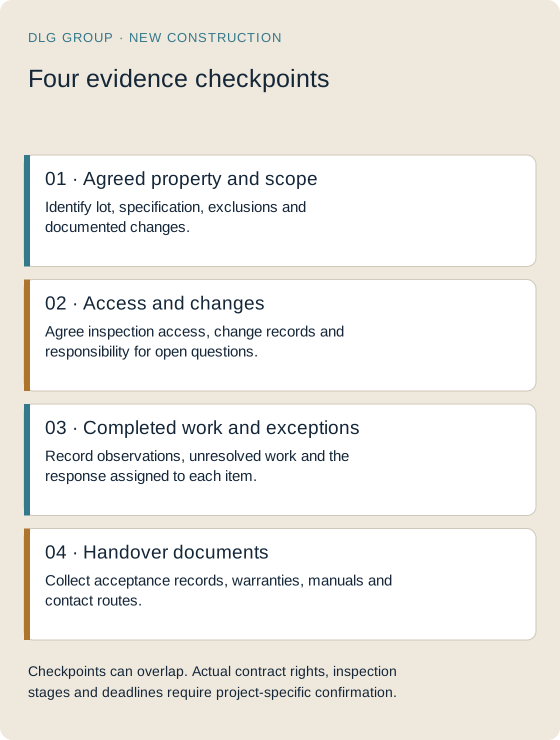
Agree what can be examined before work is concealed and what evidence will be provided if access is limited. Record changes with their price, drawing/specification revision and effect on timing. A verbal assurance cannot show which version the parties accepted.
CFPB distinguishes a condition inspection from an appraisal and explains that the purchase contract affects the available response to findings. [N01] Do not assume that a new building, municipal inspection, lender appraisal and independent buyer inspection perform the same job.
3. Put incentives beside the full financing cost
For each incentive, request the written amount, eligible costs, required provider, expiry/completion condition and what happens if the transaction changes. Compare matched lender offers using their Loan Estimates rather than comparing a headline credit with an interest-rate headline.
CFPB's Loan Estimate tool separates loan terms, monthly payment, closing costs and cash to close. [N02] A credit may affect one part of the cash requirement without making every part of the purchase cheaper. Ask the lender to explain any points, temporary rate arrangement, fees or conditions; this guide does not select a financing product.
For a planned rental hold, verify the actual rental permission, likely operating costs, construction nearby and management arrangements. Do not treat a builder rent projection as an achieved lease or guaranteed return.
4. Separate defects, warranties and service contracts
FTC explains that paid home-warranty products are generally service contracts and differ from builder and product warranties. It advises examining charges, coverage limits and the claims process. [N03] A warranty name is not a substitute for its written coverage.
- Defects list: describe the item, location, evidence and agreed corrective action.
- Builder warranty: obtain the exact covered work, periods, exclusions, reporting process and responsible entity.
- Product warranty: retain model/serial numbers, registration/maintenance requirements and any transfer conditions.
- Paid service contract: identify extra cost, service fees, exclusions, limits and provider obligations before valuing it.
Warranty cover and ordinary maintenance are different. Ask who must respond to an urgent problem and how notice is documented. Avoid assuming that a structural-sounding term covers every crack, movement or water issue.
5. Make handover reviewable
Before treating the home as fully delivered, reconcile the accepted specification and changes against the actual work. Obtain applicable completion/occupancy records, inspection and test results, equipment manuals, maintenance schedules, warranty contacts and the status of outstanding items. Ask the local professionals to identify the specific approvals needed.
For resale, request the history behind visible repairs and any available permits or specialist reports. A fresh finish may improve presentation without resolving the cause of a recurring problem. For both routes, keep uncertain scope in the ownership budget until it is clarified.
Continue with the home's systems, parcel records and closing coordination.
Sources and scope
- N01 — CFPB condition inspection and appraisal.
- N02 — CFPB Loan Estimate.
- N03 — FTC service contracts and warranty distinctions; official article text, not reader comments.
Checked 21 October 2026. This is an original scope/record framework, not a review of a particular builder's contract or a list of jurisdiction-specific inspection rights.