Material is not architecture: crystalline silicon and thin-film describe material families; PERC, TOPCon, HJT and back-contact describe cell approaches.
Form is another choice: bifacial operation, glass construction and roof integration can overlap with a cell technology.
A rating is not a yield forecast: rated watts and module efficiency do not establish annual production, shading performance or availability at your address.
01 / THE TECHNOLOGY MAP
Different labels answer different questions.
MATERIAL FAMILY
Crystalline silicon
Silicon is the dominant PV material. Monocrystalline and multicrystalline describe crystal structure; older blue polycrystalline arrays may still appear in existing homes. Color alone does not identify the model or condition. Ask for the actual module label and documents. [1]
CELL APPROACH
PERC → TOPCon / HJT / BC
These are design routes within silicon PV, not four separate roof materials. Their trade-offs need exact model data. Current industry reporting highlights n-type TOPCon; HJT and back-contact are other commercially developed approaches. [2]
MATERIAL FAMILY
Thin-film
CdTe and CIGS are examples. A thin-film cell is deposited on a supporting material; “thin-film” does not automatically mean a flexible, lightweight finished module. Verify the full assembly and its intended use. [1]
LIGHT COLLECTION
Monofacial / bifacial
Bifacial devices collect light from both sides. Rear contribution depends on light reaching the back, ground reflectance and mounting geometry. A close roof installation must not be assigned a generic rear-side gain. [3]
BUILDING FORM
Rack-mounted / BIPV
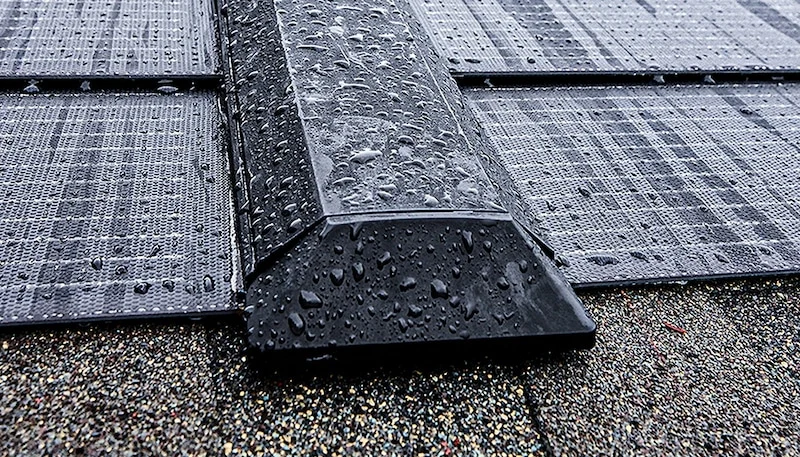
Building-integrated photovoltaics—BIPV—can form part of roofing, glazing or façades. Compare the building-envelope role and electrical system together; a shingle rating is not directly comparable with the rating of one large framed module. [4]
ABSORBER STACK
Perovskite–silicon tandem
Two absorber materials use different parts of the solar spectrum. This route is progressing from research into early commercial use. A laboratory cell record is different from a full-size module rating and from a locally supported home product. [1][10]
Label
Plain-language principle
Question for a proposal
PERC
Passivated Emitter and Rear Cell: rear-side passivation reduces losses. An established approach, not a label for every modern panel.
Does this exact model still offer an appropriate whole-system value and support package?
TOPCon
Tunnel Oxide Passivated Contact: a very thin oxide and doped silicon contact structure reduce recombination losses.
Which module rating, temperature coefficient and warranty are actually quoted?
HJT
Heterojunction: combines crystalline silicon with thin silicon layers in the cell structure.
How does the model’s temperature behavior and inverter compatibility fit this design?
BC / ABC / HPBC
Back-contact routes move collection contacts to the rear. ABC and HPBC are manufacturer-specific implementations.
What is supported by the exact datasheet, rather than the technology family’s headline claims?
Cell approach sources: [5], [6], [7], [9], [11]. Half-cut, glass–glass and all-black describe further design or appearance choices; none establishes suitability alone.
02 / PRODUCTS IN CONTEXT
Compare the product. Keep its market context.
These selected examples illustrate technology and form. They are not a “best panels” ranking, an installer recommendation, or a complete survey of October 2026 releases. Manufacturer ratings require the exact regional datasheet and model suffix.
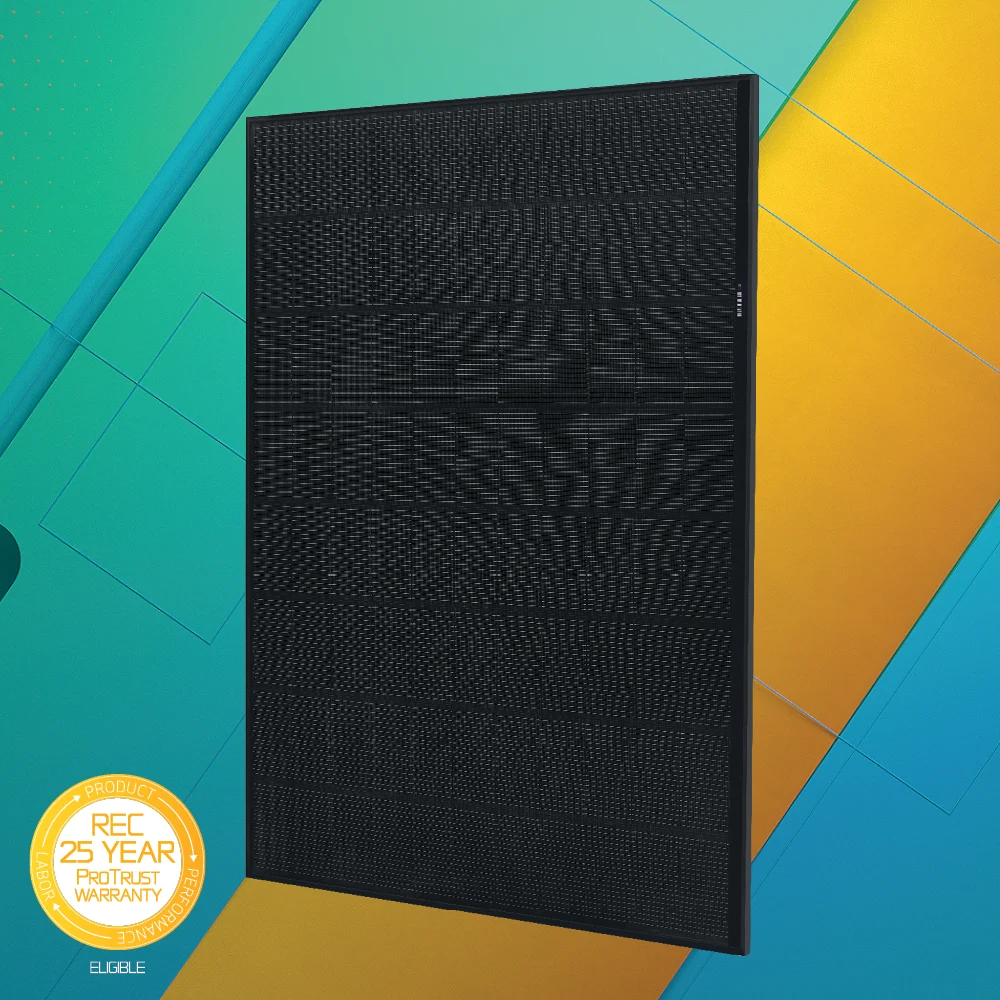
A useful U.S. residential reference for HJT. Compare roof layout, electrical compatibility and product/labor warranty conditions; the series maximum is not the rating of every variant. It is not presented here as a new 2026 launch. [7]
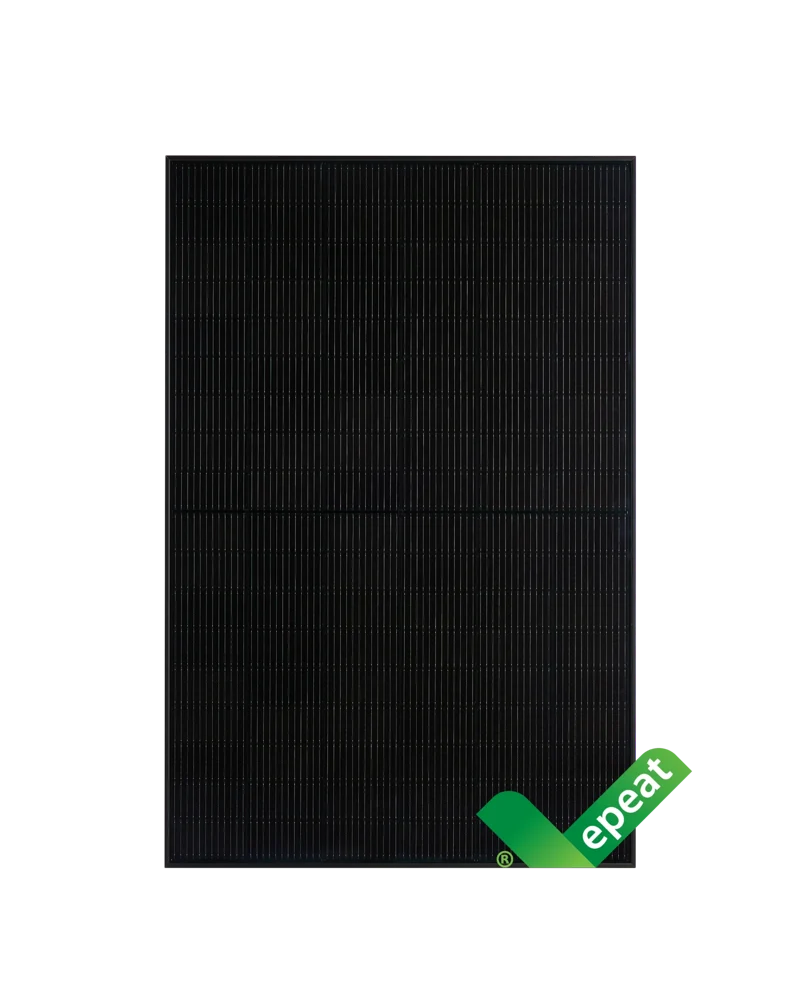
A U.S.-listed residential reference. Keep the DC module and “/AC” version distinct: model suffixes change what is included. Confirm the exact regional sheet and warranty rather than assuming all Q.TRON products share these values. [8]
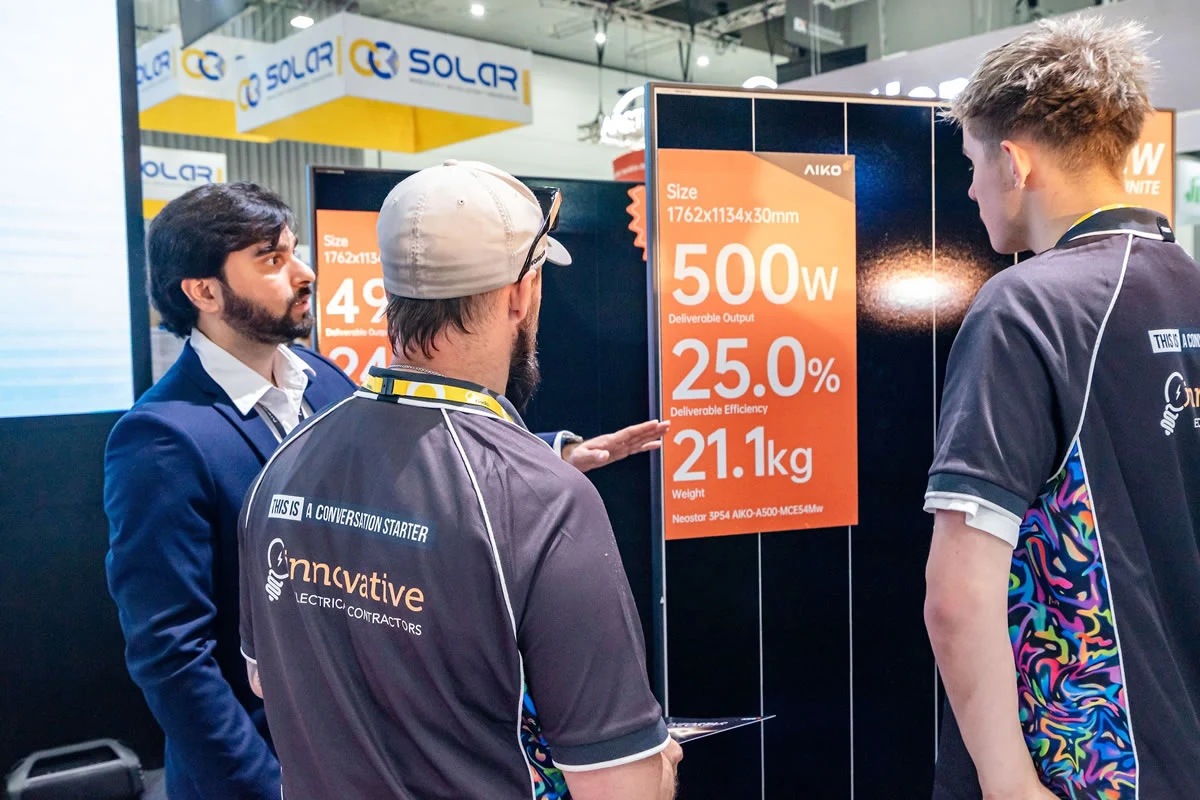
The manufacturer’s Australian announcement illustrates higher output in a compact format. It does not establish U.S. certification, stock or local warranty support. Ask an installer to verify all three for the specific model. [9]
Consider this form alongside a roof-replacement decision. Compare roof coverage, usable generating area, flashing, electrical scope, service access and warranty responsibilities. The manufacturer’s claimed 23% improvement is versus its predecessor, not 23% module efficiency. [12]
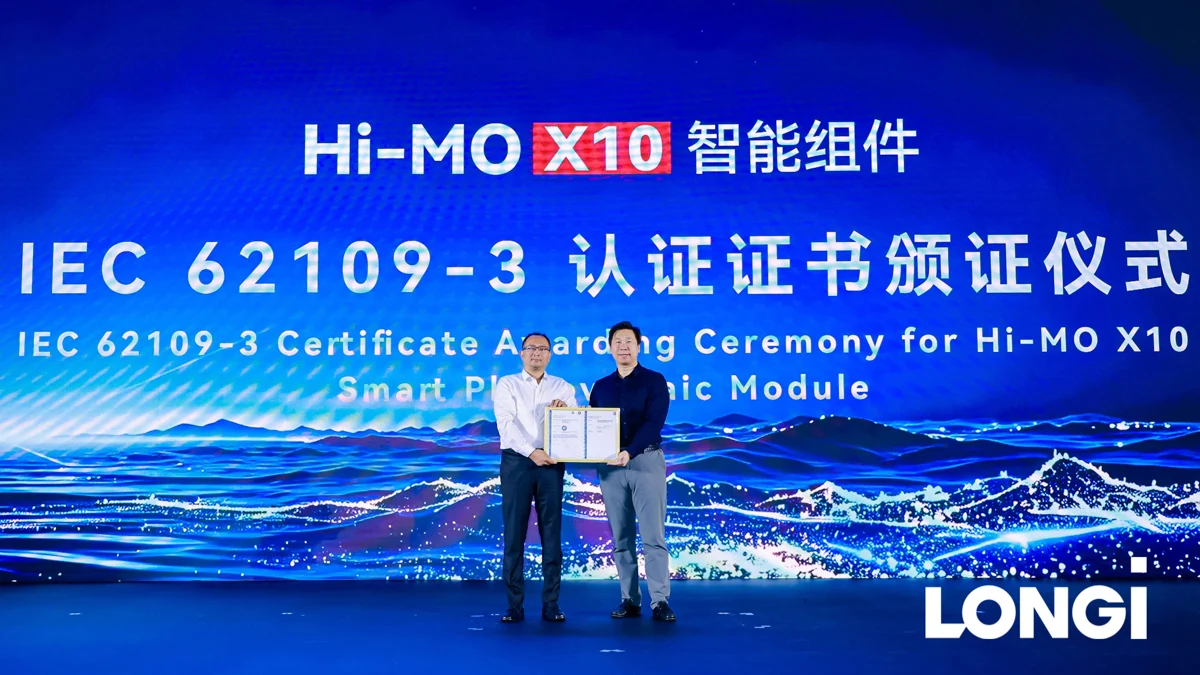
LONGi’s July 2026 release describes the Hi-MO X10 Pro at 670 W and 24.7% module efficiency, combining contact technology, an anti-dust coating and an updated frame. The release separately describes Smart Modules with module-level MPPT and monitoring. These are distinct product propositions; the 670 W figure is not assigned to every smart variant.
For a home, compare physical size, handling, mounting approval and the exact U.S. model/support route. The July release’s October mass-delivery schedule is a manufacturer plan, not confirmation of delivery or local availability. Anti-dust features do not remove the need for condition-based inspection or approved cleaning. [11] · Read cleaning & care ↗
04 / EMERGING TECHNOLOGY WATCH
Tandem: promising, with a different readiness question.
Oxford PV reported a first commercial shipment to a U.S. customer for a utility-scale project in September 2024. Its current technology page describes 25% module efficiency and a roadmap targeting 27% in 2027 and 30% in 2030. These future values are targets, not present product ratings. This review did not verify a routinely orderable residential package for MA, VA or Georgia. [10]
LONGi’s July 2026 announcement also reports a 35.5% laboratory tandem cell. That is neither the X10 Pro module efficiency nor a homeowner yield forecast. [11]
The buying question
Ask for a full-size model datasheet, applicable certification, outdoor durability evidence, warranty terms, local installer support and a deliverable quotation. An efficiency record alone answers none of these.
05 / MAKE THE COMPARISON FAIR
Watts, area and the roof are separate.
A simple count illustrates why a higher wattage changes layout questions. For an illustrative target of at least 9 kWp DC, the arithmetic minimum is:
Assumed module rating
Rounded-up count
Resulting DC rating
440 W
21
9.24 kWp
470 W
20
9.40 kWp
500 W
18
9.00 kWp
DLG arithmetic only: count = ceiling(9,000 W ÷ module W). This is not a roof design, equivalent output comparison or model recommendation. Module dimensions, clearances, structure, inverter design and local approval determine the actual layout.
Request the same comparison fields for each proposal: exact model/suffix; DC rating and dimensions; module efficiency and test basis; temperature coefficient; estimated annual kWh with the same site assumptions; warranty and service responsibilities; price and excluded work. Keep manufacturer claims separate from the installer’s site forecast.
Checked 27 October 2026. Primary-source editorial review; no hardware testing, price survey or local stock verification. Product pictures illustrate the cited material. Individual certification and warranty documents still require model-specific review.
DOE OSTI: Highly Efficient Bifacial Single Junction Perovskite Solar Cells, 2023 conference record, OSTI ID 2305661. Full archive record retrieved 28 October 2026. This is a related research record, not the identical July press release or a residential product datasheet. No laboratory gain is transferred to a roof-yield estimate. The earlier press-release address remains in the historical audit; direct retrieval was unavailable in this check.