
DLG Insights / Before the offer
Before You Buy: Check Flood Risk Beyond the Map
The flood map is one check. Where does the water go on this lot? Read the map, walk the property and verify the records before making an offer.
01 / Start with the address
Search the address in the FEMA Flood Map Service Center. Match the building and parcel to the map; write down the zone, panel and effective date. If a boundary crosses the property, the map is unclear, or the address does not resolve, ask the local floodplain administrator to help interpret it. Check separately for local stormwater maps and preliminary FEMA updates, where available.
Example: The map puts a house outside the mapped high-risk area, but the driveway slopes toward a below-grade garage. Record the map result and the driveway observation separately. Ask where runoff goes in heavy rain and whether water has reached the garage before. The map result alone does not answer either question.
02 / Follow water from the roof to the ground
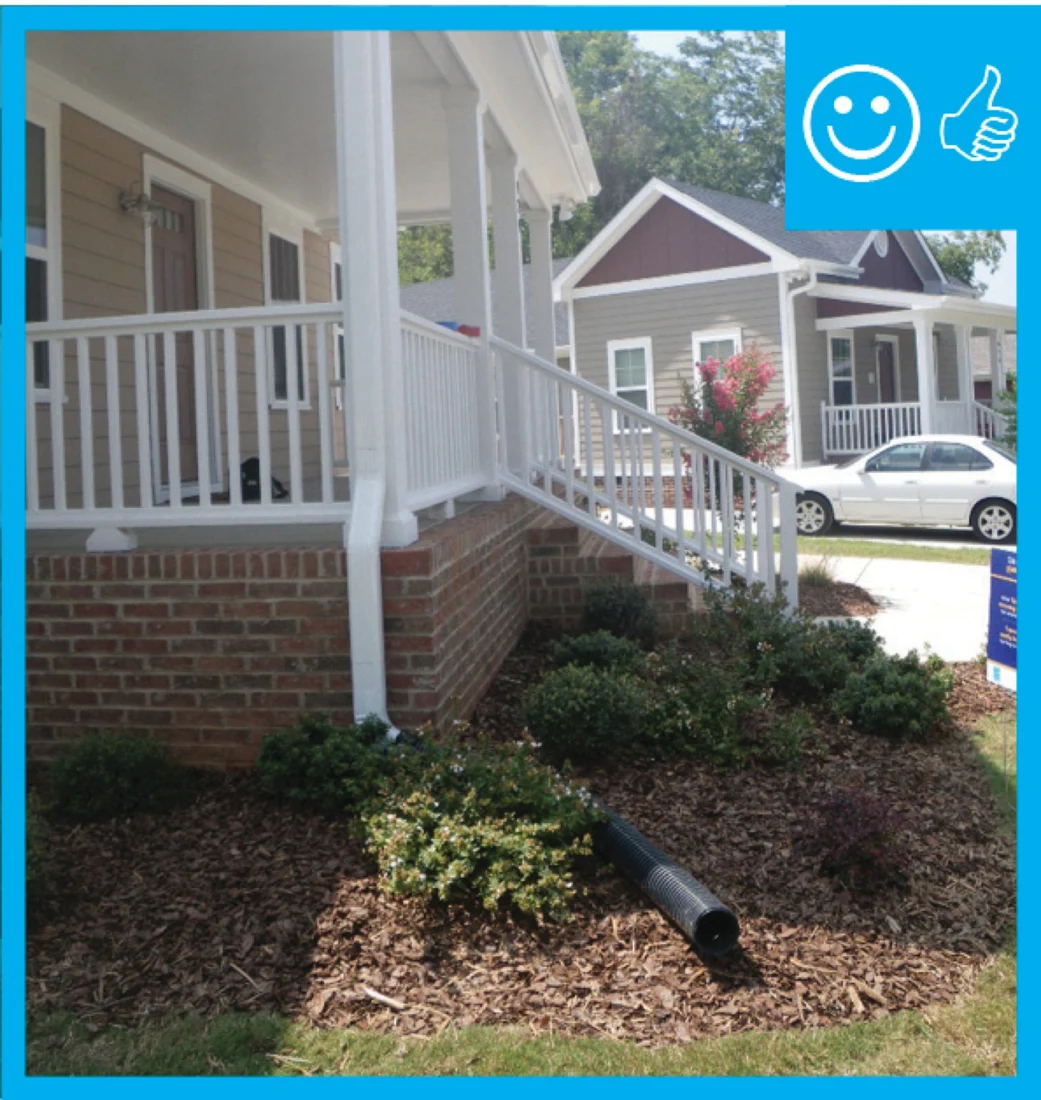
From safe, accessible areas, look at how the ground slopes near the foundation, where downspouts end, and whether a low driveway, window well or basement door sits in a possible runoff path. Look for pooling, erosion or staining; treat these as clues to investigate.
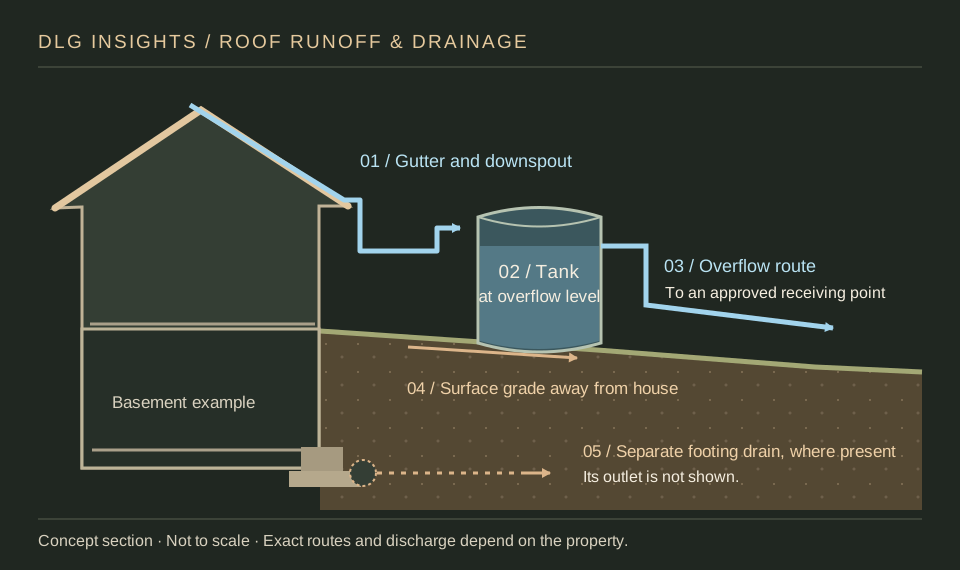
Also see the deck and exterior water checklist.
03 / Ask the seller and insurer different questions
Seller: Has water entered the basement, crawlspace or garage? Where did it come from, what was repaired, and did it recur? Ask for available disclosures, repair invoices, drainage plans and sump pump service records. Ask the home inspector what can be checked and what remains unknown.
Insurer and lender: Ask for a written quote, limits, deductible and exclusions for the address. Ask separately about flooding, sewer backup and sump overflow. Most standard homeowners policies do not cover flood damage. Confirm any lender flood insurance requirement directly; a map label alone does not establish policy coverage or price.
Bring this checklist to the showing
- Save the FEMA panel, effective date and any available local map.
- Trace visible outlets and note low openings or pooling.
- Ask about past water entry, repairs and repeat events.
- Request written insurance terms and confirm lender requirements.
Mark missing evidence as unknown and follow up before relying on it.
Sources and scope
- FEMA / Map Service Center
- FEMA / FloodSmart: Why buy flood insurance?
- Building America Solution Center / Gutters and Downspouts
Educational checklist; it does not determine the risk or insurance coverage of a specific property.
Keep an address-level flood and insurance record
Source check: November 20, 2026. The existing map, lot and insurance checklist above remains the starting route. Record the effective map panel/date, amendments or revisions, local drainage information and unanswered questions separately. A preliminary map is not the current effective map; being outside a mapped high-risk area is not a guarantee against flooding.
- Search the actual property in the FEMA Map Service Center; confirm the correct building and parcel rather than relying on the address pin alone.
- Record the effective panel and any applicable revisions or amendments. Ask the local floodplain administrator about unclear boundaries and available local stormwater records.
- Ask the seller about water entry and repairs; ask the inspector what was observable, inaccessible or outside the inspection scope.
- Request written insurance terms for the address: building/contents limits, deductibles, exclusions, basement restrictions, sewer-backup treatment, effective date and any waiting period. Confirm lender requirements separately.
- Keep unresolved evidence marked unknown. Obtain professional advice before relying on a repair or coverage assumption.
Download flood and insurance review worksheet (CSV)
The template is a local working record; no address or policy information is sent to DLG. Most homeowners policies do not cover flood damage; coverage depends on the policy, not a map label.
Put the quote in the budget once
If the separate flood premium is quoted annually, divide by 12 and enter it under Monthly additional insurance in the Mortgage & Home Cost Calculator. Keep the main home policy in Annual home insurance. If the same coverage is already included elsewhere, do not add it twice. Initial drainage or mitigation work belongs in Initial repairs, moving and setup only when buyer-paid and not already budgeted.
Fictional illustration: a separate $1,200 annual flood quote adds $100 per month to additional insurance. This is arithmetic only, not an insurance price estimate for Boston, Northern Virginia or Atlanta.
FEMA: effective-map searches and map changes · NFIP: insurance eligibility and homeowners-policy distinction · Inspection follow-up checklist