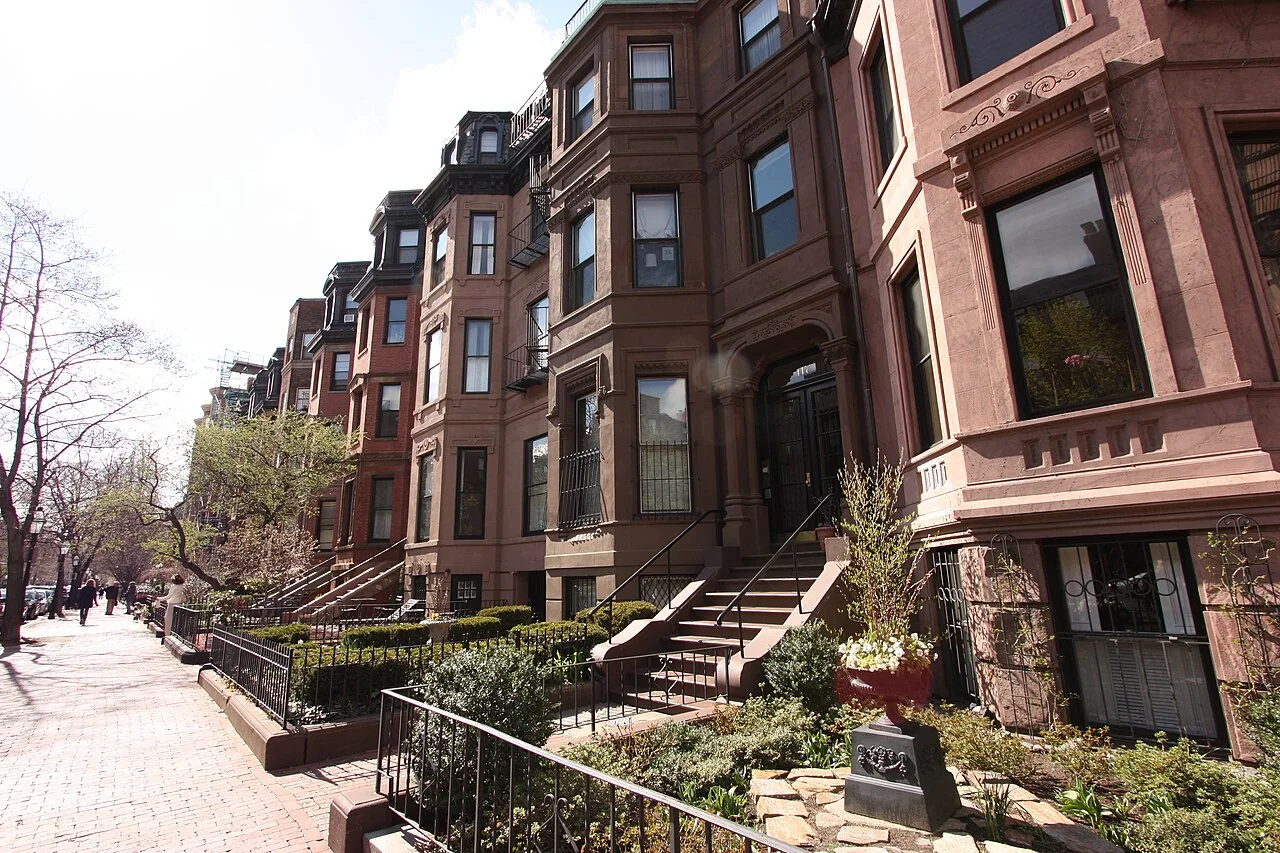
Boston · 2011. Architectural context, not a DLG property, current listing or evidence of rent or price. Cryptic C62 · Photo source · CC BY-SA 3.0. No DLG pixel edits.
1. State how the home will be used.
Begin the lender conversation with primary residence, second home or investment use; the actual property form; units; ownership/project arrangement; and any planned work. Do not describe an intended rental investment as a home you will occupy. The programme may be unsuitable before its interest rate is even compared.
CFPB separates three decisions: programme/type, repayment term and interest-rate structure. [L350-1] A conventional loan may be fixed or adjustable; FHA is a programme label, not an interest rate. Compare the dimensions separately.
2. Use programme labels as screening questions.
Conventional
Not insured or guaranteed by the government under FHA, VA or USDA programmes. Conventional loans can be conforming or non-conforming. [L350-2]
Ask: Ask the lender which product supports your occupancy and property type, what down payment and mortgage-insurance treatment apply, and which borrower and project conditions remain. Do not assume a universal credit-score or DTI cutoff.
FHA / HUD 203(b)
HUD describes this as insurance for a lender-funded loan to purchase or refinance a principal residence. Eligible structures can have one to four units. Financing can reach approximately 96.5%, subject to qualification; upfront and annual mortgage-insurance charges apply. [L350-4]
Ask: Confirm current borrower eligibility, occupancy, appraisal/property requirements, county loan limit, mortgage-insurance amount and duration. A low down payment is not the same as low total cost.
VA-backed purchase
Requires a Certificate of Eligibility, lender/VA credit and income requirements, and living in the home. No down payment can be available when price does not exceed appraised value, subject to the applicable loan circumstances; PMI/MIP is not required. [L350-5]
Ask: Confirm entitlement, appraised value, any required cash and property/project acceptance. A VA funding fee may apply unless exempt; obtain the actual fee and closing-cost breakdown. [L350-6]
USDA Section 502 Guaranteed
For eligible low- and moderate-income households occupying a primary home in an eligible rural area. Qualified borrowers can receive 100% financing through approved lenders. Income, address and borrower eligibility must be checked. [L350-7]
Ask: Check the actual address in the USDA eligibility tools and have an approved lender review the household and property. Ask about all upfront/recurring programme charges, cash needed and underwriting conditions; no down payment does not mean no costs.
These are screening summaries, not complete eligibility rules. Confirm current borrower-status/residency requirements, occupancy, lender overlays, property conditions and programme documents with the relevant lender. A website comparison does not establish approval.
3. Check the year, county and unit count behind a loan limit.
Conforming limits are not one permanent nationwide amount. Use FHFA’s annual county data for the relevant year and unit count, then confirm the applicable product with the lender. [L350-3] An older consumer explainer may still show an earlier year’s dollar threshold. This guide intentionally does not turn that old number into a current limit.
Keep conforming status separate from FHA limits, VA entitlement and a lender’s own maximum. “Jumbo” is not a synonym for every expensive home, and purchase price is not the same as loan amount.
4. Compare the rate structure, then test the payment.
On a small screen, swipe the table to read all columns.
Rate structure and the questions it creates
Structure
What changes
Evidence to request
Fixed rate
The mortgage interest rate stays fixed. Taxes, insurance, HOA and total housing outflow can still change. [L350-8]
Rate, term, payment, points/credits, mortgage insurance and non-loan costs.
Adjustable rate / ARM
Rate and payment can change under the loan terms. Do not assume a sale or refinance will occur before a reset. [L350-8]
Initial period, adjustment frequency, index, margin, caps/floor and maximum-payment illustration.
ARM pricing mechanism
Index plus margin informs the reset rate, subject to caps and other contract terms. [L350-9]
Written programme disclosure and a scenario through the first adjustment and permitted higher payments.
5. Read the term separately from the advertised payment.
The example below holds loan amount and rate constant to isolate term. It uses an invented $320,000 loan at 6%, with no fees, mortgage insurance or refinancing. It is not a pair of market offers.
On a small screen, swipe the table to read all columns.
Invented same-rate term comparison
Term
Monthly principal + interest
Total interest if held to payoff
Scope
30 years
$1,918.56
$370,682.20
Principal + interest only; no taxes, insurance, fees or HOA.
15 years
$2,700.34
$166,061.53
Principal + interest only; no taxes, insurance, fees or HOA.
CFPB explains that term affects the monthly payment and interest over time. [L350-1] The lower monthly payment does not settle the whole-cost question. Compare a plausible holding period, loan balance at exit, retained cash and any prepayment terms.
6. Build one consistent quote record.
APR is a broader borrowing-cost measure than the interest rate because it reflects specified fees and other charges. It is not a maximum future ARM rate, and it should not be compared without understanding differing loan terms. [L350-10]
On a small screen, swipe the table to read all columns.
Ask each lender to complete the same record
Record
Clarification to request
Scenario and use
Price, loan amount, down payment, occupancy, property form, unit count and association/project.
Programme and eligibility
Product name, current borrower criteria, local limit basis and outstanding conditions.
Price and timing
Estimate date, interest rate, APR, lock status and expiration.
Upfront and ongoing charges
Points, lender credits, origination fees, programme fees, insurance and duration.
Monthly payment
Principal + interest, mortgage insurance, escrow estimate and charges paid separately.
Cash and horizon
Actual cash to close, already-paid deposits, financed fees and balance at the intended exit.
Responsibility
Named contact, evidence needed, next action and response date.
The record helps you request comparable evidence. It does not rank a lender, promise approval or replace the actual Loan Estimate and loan documents. State/local assistance, repayment conditions and any funding availability need separate current verification.
Prepared 26 October 2026. Official source passages support the programme and terminology summaries. The questions and example arithmetic are DLG editorial tools. Programme pricing, borrower status, limits, assistance and underwriting must be checked for the actual application. No provider is endorsed.